Weather: Changsha is raining again; the factories feel like a humid sauna. Mood: Just inspected a disastrous bamboo order, need to vent.
In an era where everyone is trying to ditch plastic, bamboo has become the absolute darling of the eco-friendly world. Bamboo baskets, cutting boards, utensils, furniture… it seems like if you just slap the word “bamboo” on a product, it instantly gets organic traffic and a premium price tag.
But as a Quality Control (QC) inspector based in Changsha, Hunan, spending my days running around bamboo factories across central and southern China, I know exactly how deep and muddy these waters are. I see so many overseas buyers and Amazon sellers excitedly place orders based on a beautiful CAD drawing, only to receive a shipping container full of cracked or moldy products. The return rates can be a nightmare.
Today, I’m putting company business aside to put on my pure QC hat. Let’s treat this like my personal diary. I want to give you buyers a straightforward, “pitfall avoidance” guide, focusing on the real quality pain points that keep you—and me—up at night.
Pain Point #1: The Contagious “Cancer” — Mold
This is the absolute biggest pain point for bamboo products, hands down. Bamboo is naturally rich in sugars and starches, making it an all-you-can-eat buffet for mold spores. Throw those products into a dark shipping container crossing the ocean for 30-40 days in high heat and high humidity, and if the protection isn’t perfect, you’ll open the doors to a fuzzy, green-and-black disaster.
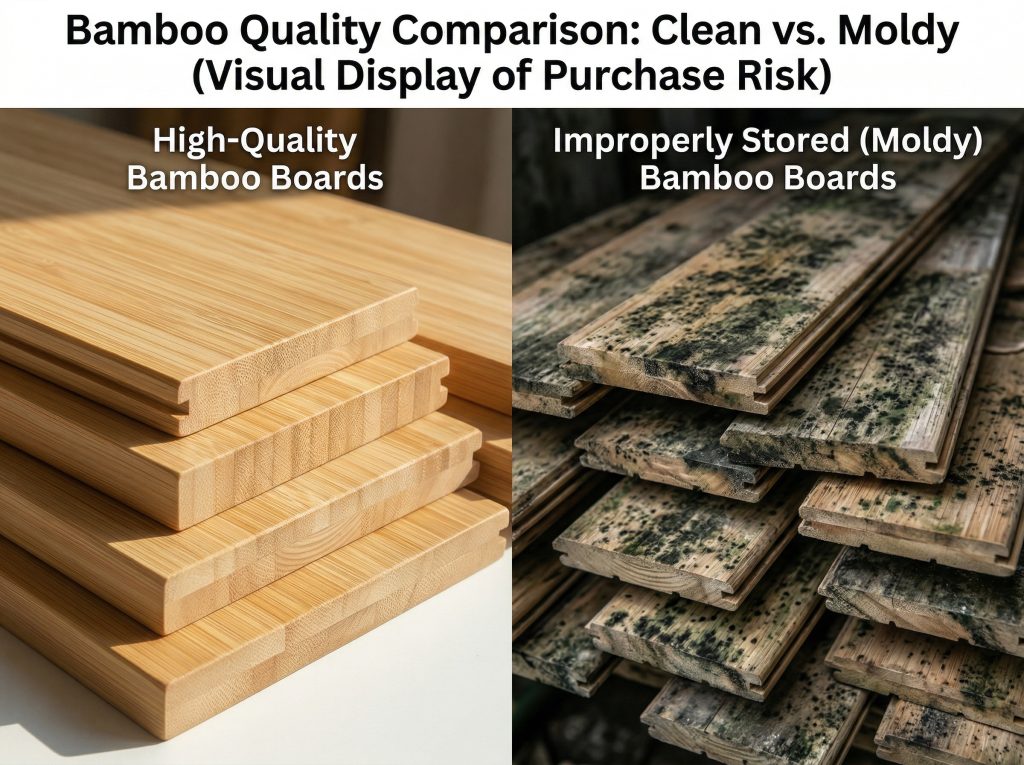
How to avoid this pitfall:
- Check the Carbonization Process: True industrial bamboo products must undergo high-temperature, high-humidity carbonization. This isn’t just to give it that nice caramelized brown color; the heat destroys the nutrients inside the bamboo, starving the mold. Some cheap factories cut the carbonization time short to save money. It looks brown on the outside, but it’s raw on the inside.
- Test the Moisture Content (MC): This is a hard metric. Before leaving the factory, bamboo products usually need their moisture content controlled strictly between 8% and 12% (depending on the destination climate). When I do an inspection, the first thing I pull out is my moisture meter. If a factory doesn’t even own this tool, or if the reading is over 15%, that batch is almost guaranteed to grow mold during transit.
- Desiccants & Anti-Mold Packets: Don’t underestimate those little packets in the packaging—they are your last line of defense. You must verify that the factory is placing an adequate amount of high-quality silica gel or anti-mold chips inside the final polybags.
Pain Point #2: The “Unbending” Stubbornness — Cracking and Warping
A lot of buyers receive a golden sample, approve it, and are thrilled. But two months after the mass production arrives at their warehouse, the bamboo cutting boards have split in half, or the bamboo table legs are completely warped.
Bamboo has a dense fiber structure, meaning it absorbs and releases moisture very quickly. When environmental humidity fluctuates dramatically, the internal stress causes the bamboo to crack or warp.
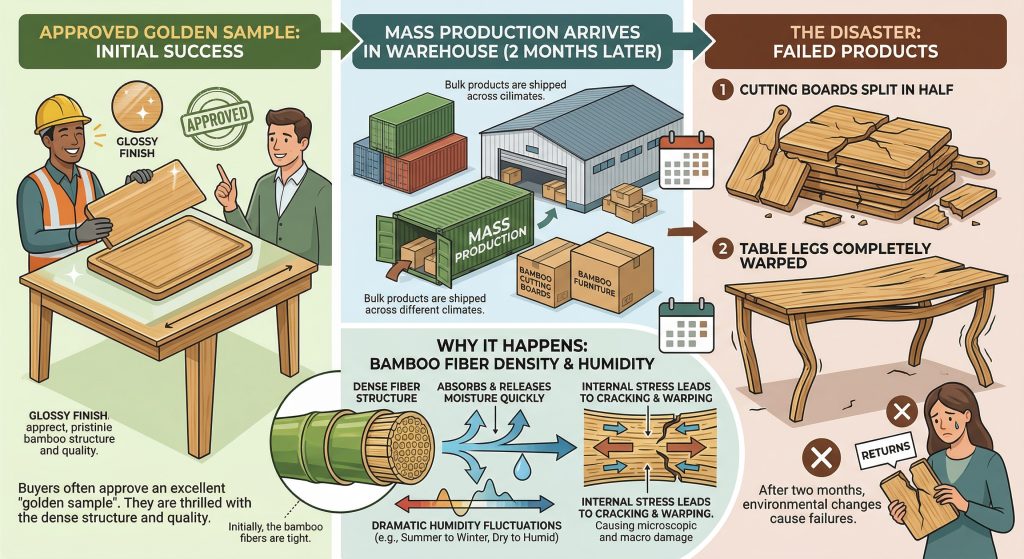
How to avoid this pitfall:
- Understand Your Material Structure:
- Strand Woven Bamboo (Heavy Bamboo): Bamboo fibers are crushed and pressed under extreme heat and pressure. It’s ultra-dense, waterproof, and rarely cracks. Great for outdoor flooring or high-end furniture.
- Laminated Bamboo Boards: The mainstream choice, made by gluing strips of bamboo together. You need to check if the glue joints are tight and if the adhesive is high quality.
- Cheap/Young Bamboo: Some factories mix in young bamboo that hasn’t grown for the required 4-5 years. It lacks strength and cracks easily.
- The “Conditioning” (Resting) Period: After raw bamboo is carbonized, you can’t just throw it on a CNC machine immediately. It needs to sit in a warehouse to acclimate to the local humidity and release its internal stress. Many small workshops skip this conditioning period to rush orders out. If they do that, it’s going to crack. Period. When inspecting, I always check their raw material warehouse to see if they hold enough aging stock.
- Smart Structural Design: If you are designing a large, flat bamboo surface without proper skeleton support or expansion joints, cracking is practically inevitable.
Pain Point #3: The Invisible Killer — Cheap Glue and Paint (Formaldehyde)
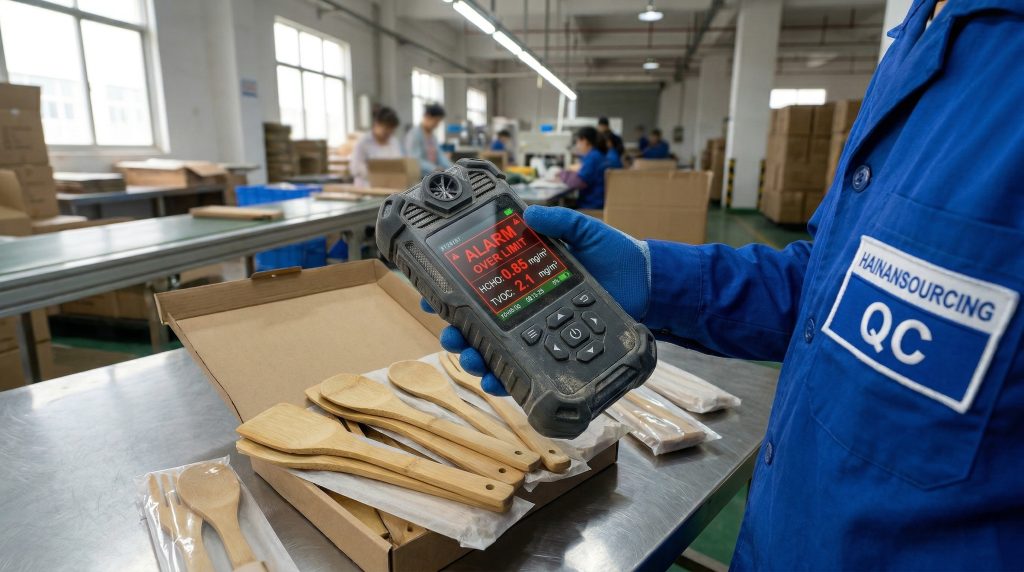
Your end consumers buy bamboo because they want an eco-friendly, healthy lifestyle. But if you buy products held together by bottom-barrel glues and coated in cheap varnish, you are essentially selling a mobile formaldehyde emitter.
Unless it’s carved from a single solid piece, most bamboo products (especially cutting boards and furniture) require a lot of glue to press the strips together.
How to avoid this pitfall:
- Demand Certifications: Don’t just trust a factory boss when they say “100% eco-friendly, food grade!” Ask for the actual test reports. FDA/LFGB for anything touching food, and E0/EPA TSCA/CARB emission standards for furniture. If you are exporting to the US or EU, these aren’t optional; they are mandatory.
- The Smell Test: It’s primitive, but it works. When I walk into a factory and open a master carton, the very first thing I do is take a whiff. If there is a sharp, sour, eye-stinging odor, the glue or paint is toxic. Genuine, quality bamboo products should only have a faint, natural bamboo scent or a slightly sweet caramel smell from the carbonization.
- The Touch Test: Run your hands over the product. If the clear coat feels uneven, grainy, or is already peeling, it means both the paint quality and the factory’s spraying techniques are terrible.
A Final Thought from the Factory Floor
Bamboo is an incredible, sustainable material. But turning a raw stalk of bamboo into a durable, qualified consumer good requires a strict process—anti-mold treatments, kiln drying, conditioning, gluing, and coating. You cannot skip a single step.
As a buyer, please do not blindly chase the lowest price. In the bamboo industry, rock-bottom prices usually mean one thing: skipped steps. It means un-carbonized raw materials (mold), rushed production without conditioning (cracking), and cheap toxic glues (health hazards).
The few dollars you save on the purchasing side will quickly be eaten up by massive refund rates, bad Amazon reviews, and customer complaints.
Alright, that’s enough venting for today. Tomorrow I’m heading out to monitor the packaging of a large batch of bamboo tea organizers. Fingers crossed the moisture content is right where it needs to be.
Keep Sourcing, Keep Safe!